








Every result on this page is tested and documented — proof behind every print.
We employ repeatable, transparent, standard-inspired testing protocols to evaluate 3D printing materials. Our methods bridge the gap between laboratory precision and real-world maker applications.

Our Testing Philosophy

We combine laboratory-style testing with real-world practicality to give makers, engineers, and buyers clear, reliable material insights.

Repeatable

Controlled printing and testing conditions ensure consistency across every material we evaluate.

Transparent

We document our methods, settings, and results so you know exactly how we test and score.

Standard-Inspired

The line height in the live website differs from the value specified in the Figma design.

Practical

We focus on what matters in real prints— printability, durability, and long-term usefulness.

Visual & Clear

Results are shown in easy-to-understand scorecards, charts, photos, and real examples.

For Everyone

Built for creators, engineers, designers, and buyers who need evidence, not marketing claims.

Our testing methodology

Standard-inspired. Repeatable. Transparent.

1

Material Intake & Preparation

Materials are logged, dried (if needed), and printed using controlled processes to ensure consistency.

2

Standard-Inspired Testing

Mechanical, thermal, and physical tests are performed using standard- inspired protocols.

3

Data Analysis & Scoring

Results are analyzed, normalized, and scored across key performance categories.

4

Documentation & Publication

Scorecards, reports, photos, and results are published with full transparency.

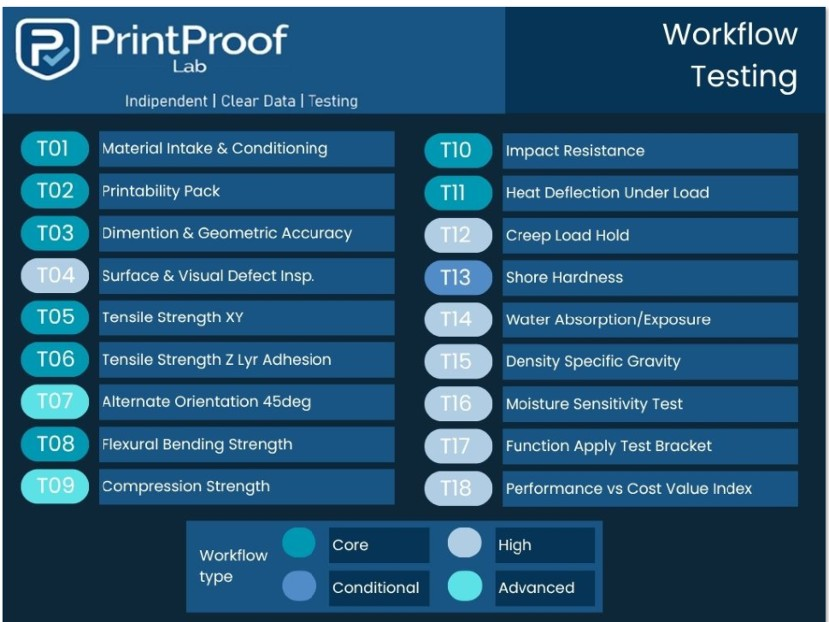
Key performance Test

Printability

Ease of printing, layer consistency, reliability, and common issues.

Dimensional Accuracy

How closely prints match intended dimensions and tolerances.

Tensile Strength

Material strength under tension and resistance to breaking.

Layer Adhesion

Bond strength between layers and resistance to delamination.

Flexural Strength

Bending performance and stiffness under flexural load.

Heat Resistance

Resistance to heat deformation and ability to maintain properties.

Creep Resistance

Ability to resist deformation under long-term load or stress.

Impact Resistance

How well the material absorbs energy and resists impact.

Moisture Stability

Effect of moisture exposure and drying on print quality and strength.

Surface Quality

Visual finish, layer lines, smoothness, and overall surface appearance.
Additional tests may be carried out depending on the material type, supplier claims, and intended application. These may include hardness, UV/weathering, chemical exposure, abrasion, flexibility, conductivity, or other material-specific checks.

Testing Methods & Equipment

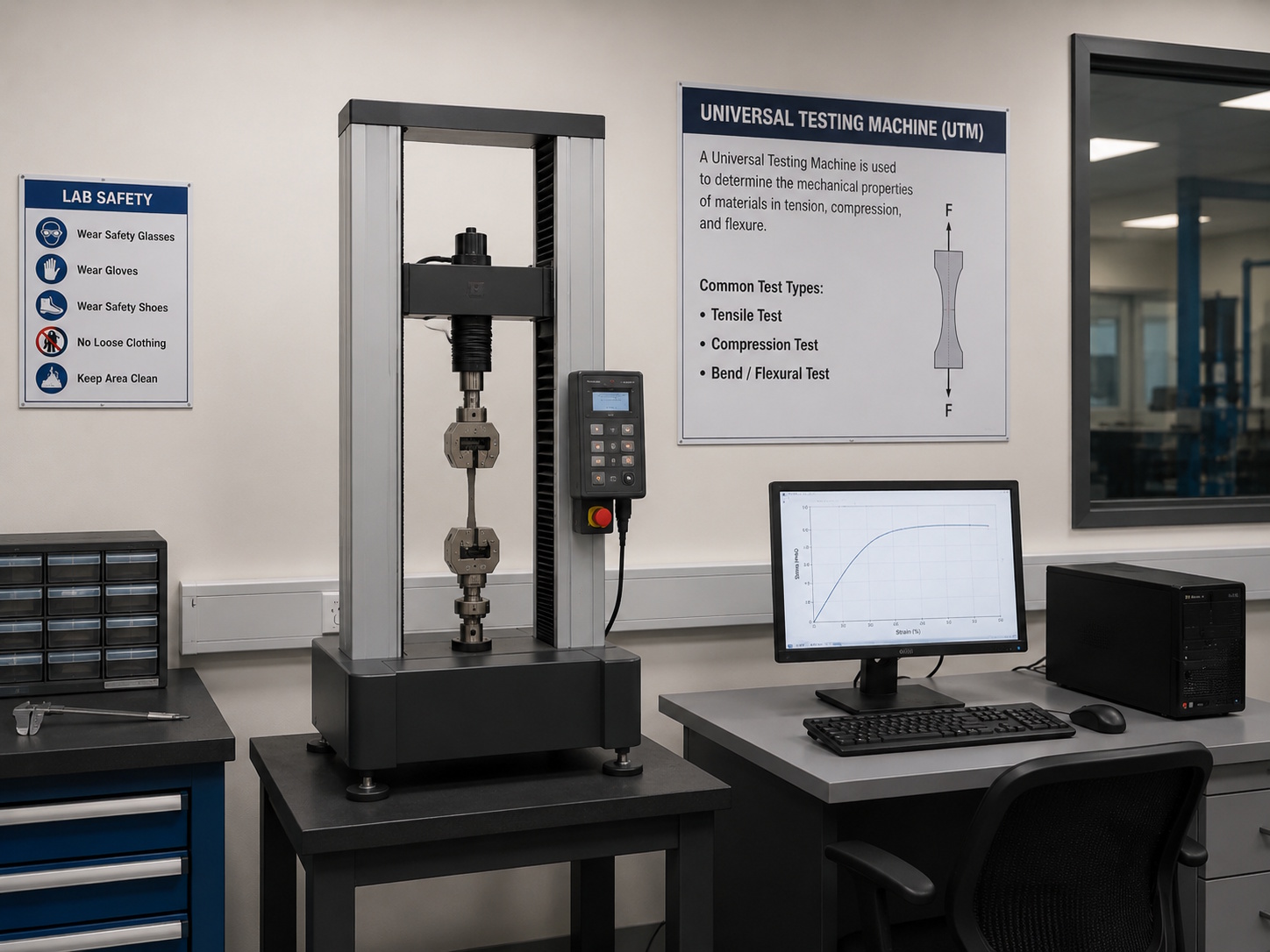
We use a combination of industry-standard equipment and proven methods.

Methods We Use

Equipment Highlights

Not seeing the material you need?

We're constantly testing new materials. Request a material to be tested or suggest a supplier.